Three F-16s and Missiles Already Delivered: The Gap Between a Pledge and Capability

Baltic Security Monitor | Analytical Brief Snapshot: 30 September 2026, 08:00 (Europe/Tallinn) · Material OSINT Update
Two announcements in one evening usually mean one promise and one clarification. Here it's different. Belgium named a specific number and deadline for F-16s, while NASAMS isn't a pledge at all — it's already on combat duty. The gap between those two statuses is the story.
Assessment
Both developments emerged after the previous BSM 20:00 snapshot and are not repeats of earlier air-defence pledges — this is a new delta, not a rehash.
What happened
Late on 29 September, President Zelenskyy wrote on X: "There is an important agreement with Belgium on the transfer of three F-16 fighter jets by the end of this year. We will work to receive these aircraft through an accelerated procedure." Reuters independently confirmed the statement and added that Ukraine had already received urgent F-16 ammunition shipments from Belgium, Spain and other partners.
In the same evening address, Zelenskyy said Ukraine had received a new NASAMS air-defence missile package the day before — a system jointly developed by the US and Norway. He also noted that of more than 100 Russian drones launched that Tuesday, 29 were jet-powered, and 18 of those were shot down.
Confirmed versus outstanding
| Claim | Status |
|---|---|
| Agreement on three F-16s from Belgium by end-2026 | ✅ Zelenskyy statement, confirmed by Reuters |
| Accelerated delivery procedure | ✅ Stated; procedure details not disclosed |
| Urgent F-16 ammunition from Belgium and Spain | ✅ Confirmed by Reuters |
| New NASAMS missile package received the day before (28 Sept) | ✅ Stated by Zelenskyy, consistent with US-Norway delivery pattern |
| Exact configuration, delivery dates, remaining service life of the three Belgian jets | 🟡 Not disclosed |
| Quantity and type of missiles in the new NASAMS package | 🟡 Not disclosed |
BSM analysis: why status matters more than quantity
Three aircraft is not a large number. What matters is the stage each pledge has reached. Belgium's commitment to transfer 30 F-16s by 2028 has stood since May 2024; today's statement is the first time a slice of that package has been made concrete — three units, a firm year-end deadline, an accelerated procedure. That is the shift from a framework agreement to a delivery schedule, and that transition, not a routine reaffirmation, is what BSM flags as material.
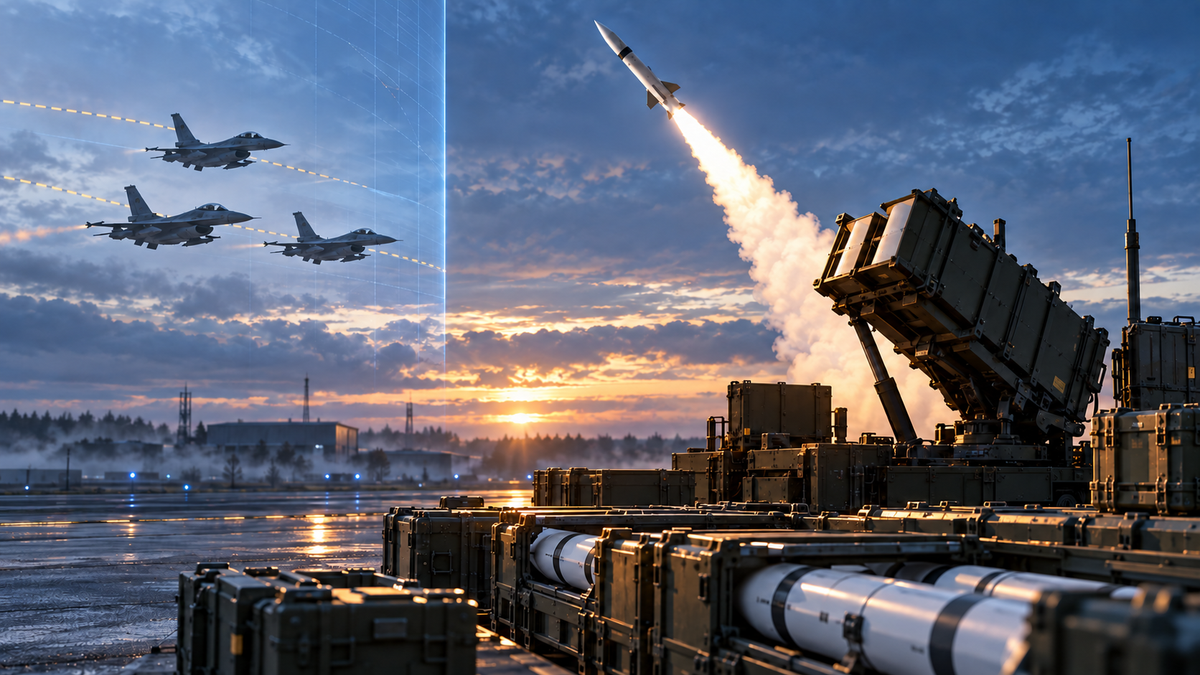
NASAMS is a different case by definition: not a pledge but a completed physical delivery of ammunition for a system already on combat duty. Combined with F-16 ammunition already arrived from Belgium and Spain, and ongoing negotiations over additional Patriot interceptors, the picture is: pledged hardware (jets) plus already-delivered ammunition for both existing and future hardware. That is the shift from allied intent to near-term operational capability.
BSM analysis: The significance is in the combination. Three additional F-16s are a modest fleet increase on their own, but they add depth and free up existing aircraft for air-defence missions rather than only strike sorties. That matters given what Zelenskyy flagged in the same address: a rising share of jet-powered drones in Russian raids, faster and harder targets for Ukraine's cheaper interceptor drones. NASAMS and F-16s close that gap from two different layers — missile and aviation.
The wider supply picture
Ukrainian officials have repeatedly named air defence as the top priority in talks with partners, including in pre-Ramstein consultations and NATO meetings on urgent air-defence needs in September. Norway remains a systemic supplier of NASAMS missiles: back in January the country delivered a significant batch of interceptors coordinated with the US and other partners, since Norway's own stockpiles cannot cover Ukraine's needs alone.
Yesterday's BSM update on a new AMRAAM production contract illustrates the same industrial tension: allies are simultaneously supplying Ukraine and expanding production to replenish their own inventories.
What it means for the Baltic states
The model on display here — a dated pledge plus already-delivered ammunition — is the kind of assistance the Baltic states themselves are pressing partners for on their own air-defence perimeter. How quickly an agreement here turned into cargo arriving is a useful benchmark for how seriously to weigh similar pledges to the region.
Conclusion
The gap between "agreed" and "delivered" is rarely this visible in a single digest cycle. The three F-16s become operational reality only once they physically arrive — that's the next checkpoint. The NASAMS missiles are already on duty.
Next checks: physical delivery of the three Belgian F-16s and confirmation of their configuration; whether other countries announce aircraft beyond Belgium's three; conclusion of the ongoing Patriot interceptor negotiations.
Baltic Security Monitor (osint-baltic.com) — an analytical publication on security on NATO's northeastern flank. All OSINT assessments are produced by an automated monitoring system using open sources.